
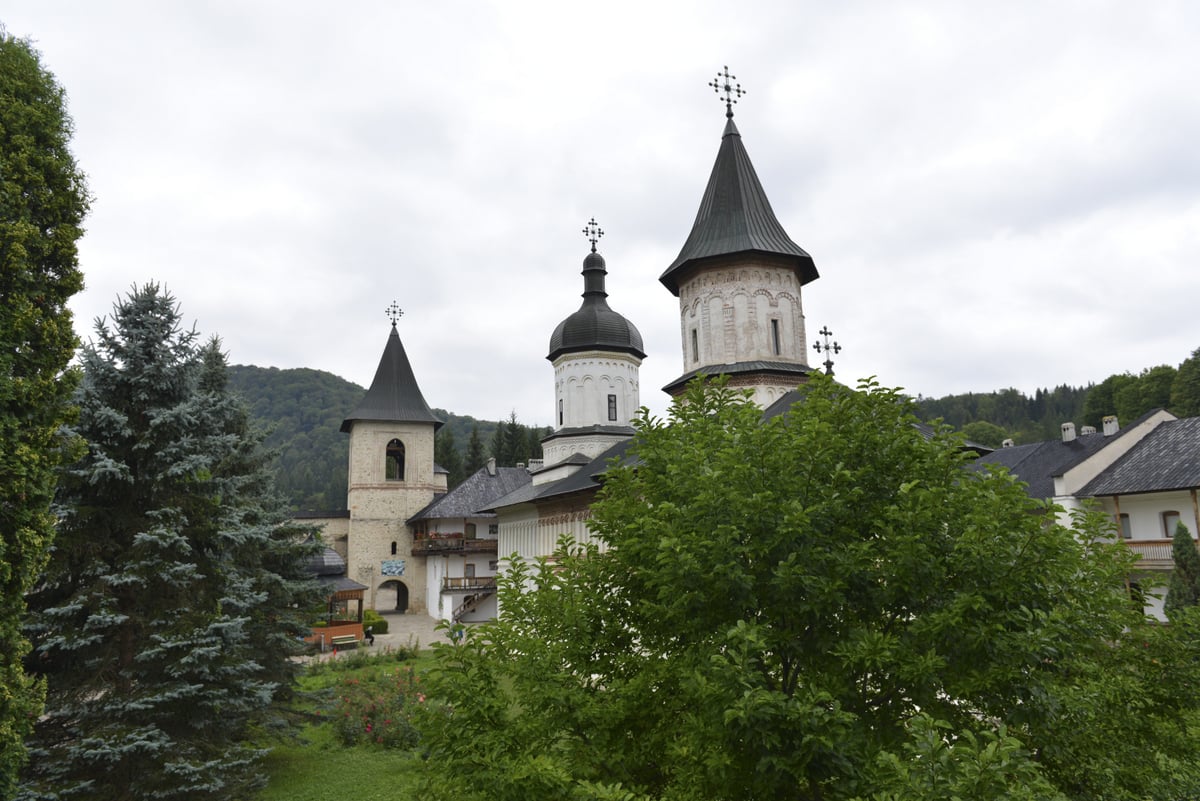
Secu Monastery
Secu Monastery, founded in 1602 by the high steward Nestor Ureche, is an old religious settlement in the Neamț region, built on the site of the “Hermitage of Zosim”. With its fortified architecture and scholarly tradition, the monastery combines community life with the spiritual heritage of Moldavia.
Key facts
Founded by:
High steward Nestor Ureche (1602), on the site of the “Hermitage of Zosim”
Patron feast:
The Beheading of St John the Baptist (29 August)
Type:
Monastery for monks; historic monument (LMI NT-II-a-A-10735)
Architecture:
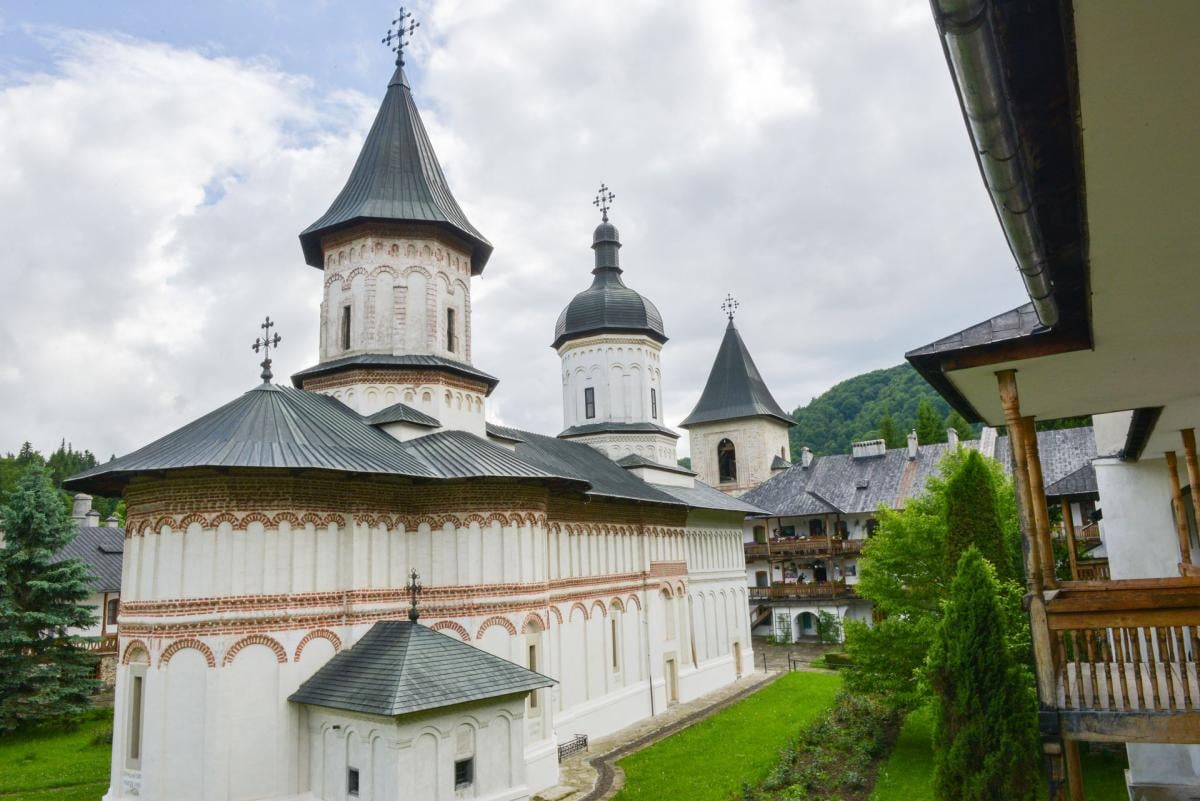
Enclosure walls and an entrance tower in a fortified style, typical of medieval Moldavia
What to see:
- Enclosure walls and fortified entrance tower
- The “Nativity of the Mother of God” chapel (1640)
- The “St Nicholas” chapel (1823)
- The great church (1832)
- The tomb of St Varlaam, Metropolitan of Moldavia
- Museum with icons, old printed books and heritage objects
St Metropolitan Varlaam
The monastery holds the tomb of St Varlaam, Metropolitan of Moldavia (1590–1657), who founded Moldavia's first printing press at the Three Hierarchs Monastery in Iași and was a renowned translator and scholar of Moldavian culture.
Contact and information
Address
Secu village (Pipirig)
Vânători-Neamț commune, Neamț County
Website
secu.mmb.roStatus
Historic monument (LMI NT-II-a-A-10735)
Getting there
Location
Vânători-Neamț commune
Secu village (Pipirig)
Highlights
Medieval fortified architecture
A secluded, peaceful natural setting
Monastery circuit
Nearby: Neamț, Agapia, Văratec
Part of the Neamț region
Fortified architecture and a scholarly tradition
Discover the monastery founded by Nestor Ureche, then keep exploring with the Piatra Neamț cable car